Mendoza
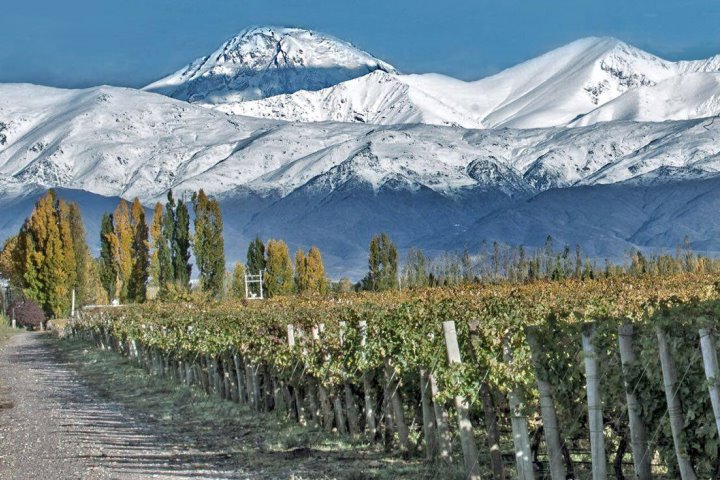
The vines grow where most regions would put a ski lift.
What Mendoza teaches: altitude
Mendoza's vineyards sit at 900 to 1,500 metres, in the rain shadow of the Andes. The days are hot, the nights are cold, and that swing preserves the acidity that makes high-altitude Malbec taste alive instead of heavy. Mendoza teaches altitude, the invisible ingredient you can taste.
The wines
Malbec is the headline: violets, dark plum, velvet tannin. The Uco Valley's high-altitude bottlings add freshness and mineral grip. Cabernet Franc is the insider's pick.
Where to go
Luján de Cuyo, close to the city, is classic Malbec country. The Uco Valley, an hour south, is the frontier: Catena Zapata's Mayan-pyramid winery is the region's monument, Zuccardi's concrete temple in Altamira won world's-best-vineyard awards repeatedly, and Salentein pairs wine with an art gallery and Andes views that don't look real.
Eat
Asado is the format. Siete Fuegos at The Vines resort, Francis Mallmann's seven open fires, is the pilgrimage version. Most Uco wineries serve long vineyard lunches; book the wine pairing and surrender the afternoon.
Getting there
Fly into Mendoza from Buenos Aires or Santiago. Harvest runs February to April; the Vendimia festival in early March is the city at full tilt.
Know the wine before you go.
The app teaches you Malbec in five minutes, then helps you order it with confidence. Learn the grape, then come back and plan the trip.
Compare Mendoza tours
Heading to Mendoza?
Leave your email for a short welcome you can use straight away, and a note whenever there is more to share on Mendoza. Free, no spam, unsubscribe anytime.
Mendoza, quick answers.
What wine is Mendoza known for?
Malbec, grown high in the foothills of the Andes.
Why does altitude matter in Mendoza?
Height brings cool nights and strong sun, which keeps a warm-climate wine fresh and deeply coloured.
When is the best time to visit Mendoza?
March around harvest, or the southern-hemisphere spring, October to November.